What's Inside?
- Explore Netflix comedy shows that blend sharp writing, emotional depth, and hilarious moments that stay with you long after watching ends.
- From quirky workplaces to awkward teen lives, these Netflix comedy shows offer diverse humor styles suited for every mood and taste.
- Enjoy Netflix comedy shows featuring iconic characters, clever storytelling, and binge-worthy episodes that balance comedy with meaningful, relatable themes.
Comedy has a way of finding us when we need it most. Sometimes it’s a quick escape after a long day. Other times, it’s the comfort of familiar characters who feel like old friends. On Netflix, that comfort is always within reach. The platform has quietly built a deep bench of comedy, from sharp workplace sitcoms to wildly inventive sketch shows. The best of them do more than land jokes. They build worlds you want to live in, even if just for half an hour.
If you’ve ever caught yourself quoting a line days later or thinking about a character like they’re real, you already know the feeling. Here are 5 comedy shows you should watch on Netflix to make your day lighter and funnier. (Shows are not ranked)
Brooklyn Nine-Nine (2013–2021)

At first glance, Brooklyn Nine-Nine looks like a traditional police procedural. There is a precinct, a group of detectives, and a steady stream of cases. But it quickly reveals itself to be something more playful and surprisingly thoughtful. Set in New York City’s 99th Precinct, the show follows a tight-knit team led by the stoic yet quietly compassionate Captain Raymond Holt. His arrival disrupts the laid-back rhythm of the squad, especially for Jake Peralta, a brilliant but immature detective who prefers instinct over rules.
What makes the series click is its ability to shift gears without losing its identity. One moment, it leans fully into absurd humor. The next, it touches on real-world issues with a level of self-awareness that feels earned rather than forced. The writing grows sharper over time, allowing the show to mature alongside its characters.
The chemistry among the cast does much of the heavy lifting. Each character brings a distinct comedic style, and the interplay between them keeps the humor fresh. Whether it is a high-stakes case or a ridiculous office bet, the group dynamic never feels static. Instead, it evolves in ways that reward long-term viewers.
By the later seasons, the show becomes more than just a sitcom. It is a story about growth, friendship, and the small victories that come from working together. That balance between humor and sincerity is what keeps it endlessly rewatchable.
Seinfeld (1989–1998)
When Seinfeld first aired, it did not arrive with the weight of expectation. In fact, it took time for audiences to fully grasp what it was doing. A sitcom centered on the mundane details of everyday life did not seem like a formula for success. Yet, over time, it became one of the most influential comedies ever made.


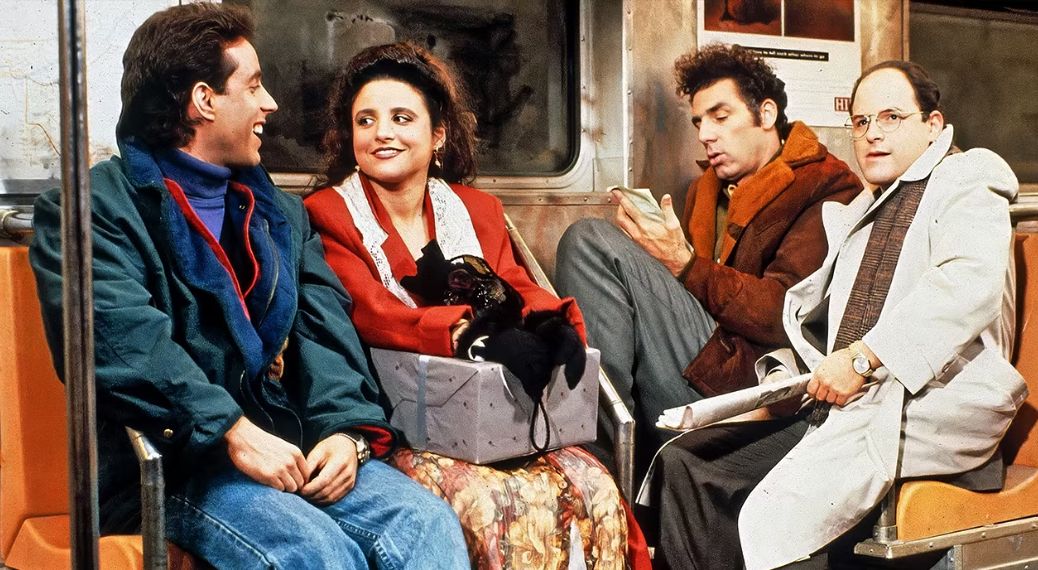
The premise is deceptively simple. Jerry, a stand-up comedian, spends his off-stage life navigating trivial frustrations with his friends George, Elaine, and Kramer. But within those small, often ridiculous situations lies the show’s brilliance. It turns minor inconveniences into full-blown narratives, giving weight to things most people would normally dismiss.
“Sponge-worthy,” “yada yada yada,” and “No soup for you!” are just a few of the endlessly quoted lines from this iconic series. When Seinfeld debuted in 1989, it introduced viewers to the idiosyncratic exploits of New York comedian Jerry (Jerry Seinfeld), his ex-girlfriend Elaine (Julia Louis-Dreyfus), best friend George (Jason Alexander), kooky neighbor Kramer (Michael Richards), and a parade of memorable side characters and guest stars.
Even now, decades later, the humor holds up. The writing feels precise, almost surgical in how it builds and pays off jokes. Each episode layers multiple storylines that eventually collide in ways that feel both chaotic and perfectly timed.
There is also something comforting about its consistency. The characters rarely change in traditional ways, yet the show never feels repetitive. Instead, it thrives on its own rhythm, creating a world where nothing really matters and somehow everything does.
Sex Education (2019–2023)

Sex Education walks a delicate line. It is bold and often explicit, yet deeply empathetic at its core. Set in the fictional Moordale Secondary School, the series follows Otis, a socially awkward teenager who happens to be the son of a well-known sex therapist. Despite his own insecurities, he teams up with classmate Maeve to run an underground sex therapy clinic for fellow students.
The premise alone sets the stage for humor, but the show does not stop there. It dives into the emotional complexities of adolescence with a sincerity that feels refreshing. Characters are allowed to be messy, confused, and vulnerable. That honesty is what makes the comedy land even harder.
As the son of sex therapist Jean Milburn (Gillian Anderson), Otis (Asa Butterfield) finds himself uniquely equipped to help his fellow students at Moordale Secondary with their intimacy woes. He and his classmate Maeve (Emma Mackey) set up a sex therapy clinic at school to do just that — and quickly find success. But things get complicated when Otis can’t help developing feelings for his business partner.
The ensemble cast adds depth to every storyline. Each character brings a different perspective, ensuring that no single narrative dominates the series. Instead, the show builds a layered portrait of teenage life, one that feels both specific and universal.
What lingers most is its warmth. Beneath the awkward encounters and sharp humor lies a genuine sense of care. It is a show that makes you laugh, but also encourages you to listen and understand.
BoJack Horseman (2014–2020)
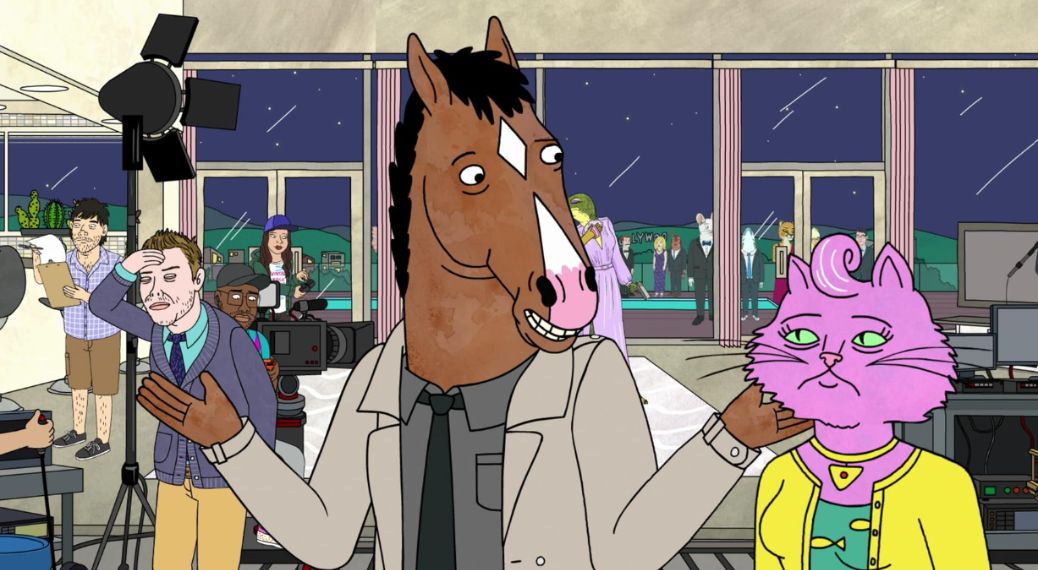
At first glance, BoJack Horseman feels like an unlikely standout among Netflix comedy shows. An animated series about a washed-up horse actor sounds absurd, and it is. But that absurdity quickly gives way to something far more layered. The show pulls you in with humor, then slowly reveals a deeply human story about identity, regret, and the cost of chasing relevance.
BoJack, once the star of a popular sitcom, now drifts through life in a haze of self-doubt and bad decisions. His past success continues to define him, even as he struggles to move forward. Hollywood becomes less of a dream factory and more of a mirror, reflecting his insecurities back at him. The series uses this setting not just for satire, but for something more personal.
Life after achieving early success is explored in the animated series BoJack Horseman. Once a celebrated sitcom star, BoJack Horseman (Will Arnett) has since coasted into a life of meaningless parties attended under a drunken, self-destructive haze. However, BoJack has a plan to reclaim his former glory as an A-list celebrity, and with it, the feeling of happiness he fears is permanently lost.
What makes the show resonate is its honesty. It does not shy away from uncomfortable truths. BoJack is flawed, often frustrating, yet painfully real. His journey is not about easy redemption, but about confronting the consequences of his actions.
BoJack Horseman is a comedy by design, but the series is refreshingly unafraid to take its main character into dark places when exploring the crippling effects of depression. Loaded with animal puns and cynical, wry humor, BoJack Horseman combines absurdist sight gags with the painfully relatable to create a unique, one-of-a-kind series. Even though half the characters were anthropomorphic animals, the trials they faced were always realistically grounded and often darkly hilarious.
That balance between humor and heartbreak is what makes it unforgettable.
I Think You Should Leave with Tim Robinson (2019–)

Some comedies ease you in. I Think You Should Leave with Tim Robinson does the opposite. It throws you straight into uncomfortable, surreal scenarios and dares you to keep up. Each sketch starts with a relatable situation, then spirals into something completely unhinged.
The humor often comes from escalation. A small social mistake turns into an all-consuming obsession. Characters refuse to admit they are wrong, doubling down in ways that feel both ridiculous and oddly familiar.
A sketch series that has turned into a cultural craze, I Think You Should Leave with Tim Robinson, is one of the best comedy shows on Netflix. Co-created by and starring Tim Robinson, the sketch series mines the most uncomfortable situations possible for sometimes bizarre but always hilarious comedy.
What makes the show stand out is its commitment to its tone. It never pulls back or tries to explain itself. Instead, it trusts the audience to find humor in the chaos. That confidence has helped it build a loyal following, with sketches that quickly become quotable and widely shared.
It may not be for everyone, but for those willing to embrace its style, it offers something refreshingly different. In a crowded comedy landscape, that kind of originality is hard to ignore.