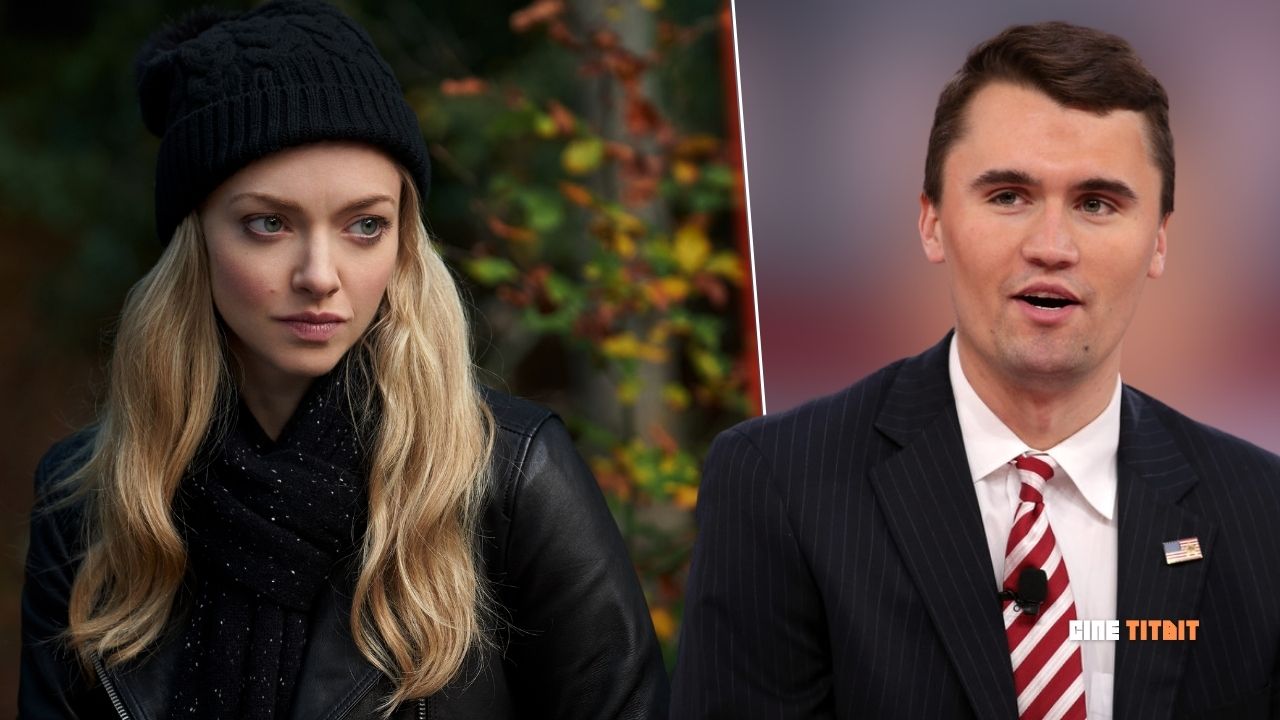
Amanda Seyfried’s firm response to the debate surrounding her remarks about Charlie Kirk has become one of the most talked-about moments of her recent press cycle. Her stance has drawn widespread attention across the entertainment world, especially as she promotes The Testament of Ann Lee. The exchange has developed into a broader discussion about accountability, public expression and the fraught climate surrounding political commentary.
The conversation intensified after Seyfried addressed the criticism that surfaced when she reacted to Kirk’s death. Her position has remained unwavering, shaped by her belief that public figures should be able to express their concerns without having their intent distorted. Her decision to clarify her viewpoint added another layer to the already charged debate.
Amanda Seyfried Refuses To Apologise For Her Comments On Charlie Kirk
During her Who What Wear interview, Amanda Seyfried detailed why she has no plans to retract her earlier description of Charlie Kirk. “I’m not f*cking apologizing for that,” she said, offering a candid explanation of why she felt her assessment had been rooted in evidence. She added (via Variety),
“I mean, for f*ck’s sake, I commented on one thing. I said something that was based on actual reality and actual footage and actual quotes. What I said was pretty damn factual, and I’m free to have an opinion, of course.”
Her initial comment, posted soon after Kirk was shot during a speaking event in Utah on 10 September, read, “He was hateful.” The response ignited claims that she had endorsed the violence. She countered that narrative by explaining her perspective in a follow-up Instagram post.
“I don’t want to add fuel to a fire. I just want to be able to give clarity to something so irresponsibly (but understandably) taken out of context. Spirited discourse – isn’t that what we should be having?”
Seyfried continued by highlighting the complexities involved when discussing someone whose rhetoric she found troubling. “We’re forgetting the nuance of humanity,” she wrote.
“I can get angry about misogyny and racist rhetoric and ALSO very much agree that Charlie Kirk’s murder was absolutely disturbing and deplorable in every way imaginable. No one should have to experience this level of violence. This country is grieving too many senseless and violent deaths and shootings. Can we agree on that at least?”
How Amanda Seyfried Used Her Platform To Reclaim Her Voice

In the days following her comment, Seyfried noticed how quickly online reactions escalated. The spread of screenshots, threats to boycott her work and accusations of celebrating Kirk’s murder amplified her concerns. She explained that she briefly considered removing her remark, but she decided against erasing her stance. “Thank God for Instagram,” she said. She spoke of feeling as if her words had been “stolen and recontextualized which is what people do, of course.”
Her reaction was not isolated within Hollywood. Several public figures attempted to balance condemnation of the violence with honest reflections on Kirk’s divisive messaging. Among them was Jamie Lee Curtis, who said,


“I disagreed with him on almost every point I ever heard him say, but I believe he was a man of faith, and I hope in that moment when he died, that he felt connected with his faith.”
Others, like Kristin Chenoweth, found themselves navigating waves of backlash for comments that attempted to show empathy while acknowledging ideological differences. Chenoweth later revealed that the storm nearly overwhelmed her, describing the pressure she faced after expressing condolences.