What's Inside?
- Mother Mary explores grief, fame, and fractured intimacy through Mary and Sam’s reunion, revealing emotional scars that time never fully heals.
- The mysterious red spirit symbolizes unresolved pain, acting as a shared emotional force that binds Mary and Sam across distance and time.
- Mary’s near-fatal fall raises questions about intent, mental state, and supernatural influence, leaving viewers to interpret truth within layered ambiguity.
The following contains spoilers for Mother Mary
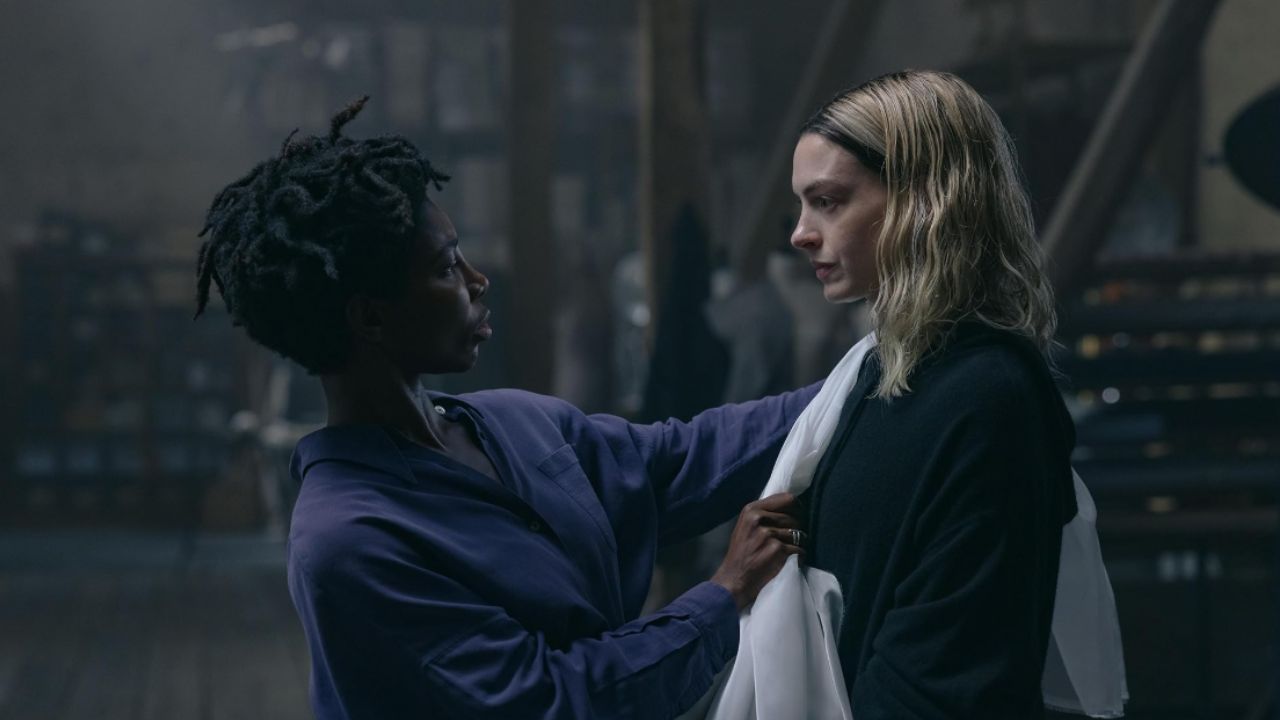
In Mother Mary, director David Lowery returns to the kind of hushed, emotionally charged storytelling that defined The Green Knight, but this time he turns inward. The spectacle is smaller, the setting tighter, yet the emotional stakes feel immense. Anchored by Anne Hathaway and Michaela Coel, the film follows a global pop icon and the designer she left behind. What unfolds is not just a reunion, but a slow excavation of memory, regret, and the quiet ways love can linger long after it ends. The film avoids neat answers, choosing instead to sit with discomfort and ambiguity, letting its characters breathe in the spaces between what is said and what remains unsaid.
Why Does Mother Mary Keep Mary and Sam’s Relationship Deliberately Unspoken?

At its core, Mother Mary is about a relationship that refuses to be easily defined. Mary and Sam’s connection is never labeled outright, yet it carries the unmistakable weight of something deeply personal. The film trusts the audience to read between the lines, and in doing so, it captures a truth that feels more authentic than any explicit declaration.
From the moment Mary seeks Sam out again, there is a tension that goes beyond professional fallout. Sam was not just a collaborator who helped shape Mary’s early image. She was someone who understood her at a level few others did. Their separation is framed less like a career disagreement and more like a breakup that neither of them fully processed.
That emotional residue seeps into every conversation. Sam’s bitterness does not feel performative. It feels earned. When she recalls the moment Mary moved on without her, it lands with the quiet devastation of abandonment. Flashbacks deepen that sense of loss, showing how Sam’s admiration curdled into resentment, then into a kind of numb detachment.
What makes the film compelling is that it never tries to rekindle romance. Instead, it focuses on something harder and more honest. Closure. When Mary finally apologizes, it is not framed as a grand gesture but as a necessary one. Acknowledging what they meant to each other becomes the only way forward.
By keeping their relationship implied, the film allows it to feel expansive. It could be romantic, creative, or something that defies both categories. That ambiguity is the point. It mirrors how real relationships often exist beyond easy labels, shaped more by shared history than by definitions.


What is the Red Spirit in Mother Mary Really Representing
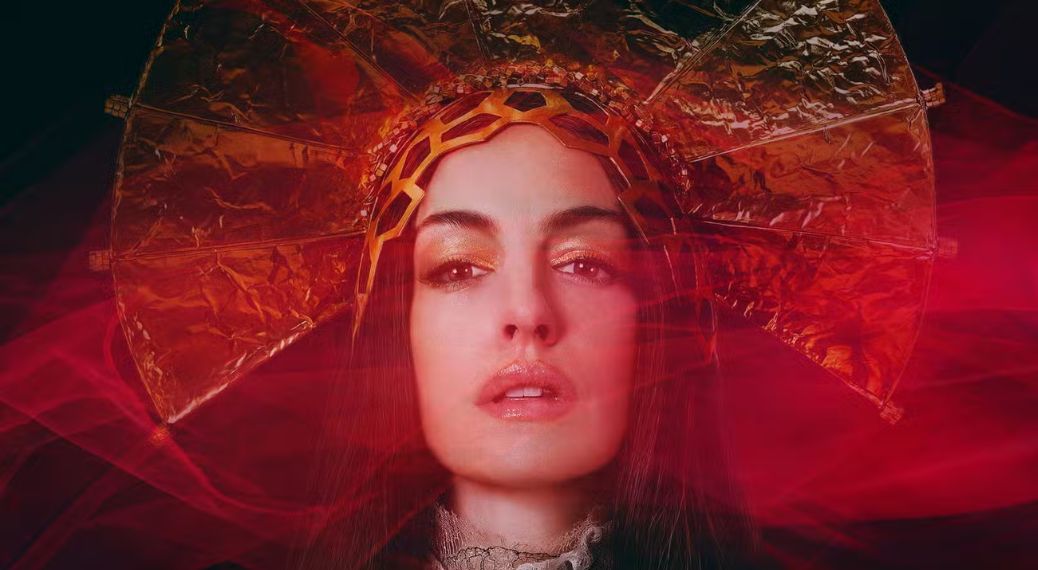
The red spirit drifts through Mother Mary like a question the film refuses to answer outright. It is the only element that leans openly into the supernatural, yet even then, it feels grounded in something deeply human.
Sam describes her love for Mary in a way that is both vivid and unsettling, comparing it to a broken tooth. It is a pain you learn to live with, one that fades but never fully disappears. The red spirit seems to embody that kind of lingering ache. It appears at moments of emotional rupture, tying itself to both women in ways that are hard to ignore.
When Sam says the spirit left her after she watched Mary perform without her, it marks a turning point. That was the moment she began to let go. Or at least tried to. For Mary, the experience is more consuming. The entity does not just visit her. It seems to enter her, becoming part of her emotional landscape. What follows is a visible unraveling. Exhaustion. Disconnection. A sense that she is carrying something she cannot name.
The film hints at a broader mythology. The spirit’s arrival is linked, however loosely, to a ritual performed by another pop star, suggesting forces that stretch beyond the personal. But Mother Mary never leans too far into that thread. It pulls back, grounding the spirit in metaphor rather than lore.
Crucially, the entity is not framed as evil. It does not attack or manipulate in obvious ways. Instead, it lingers. It reflects. It amplifies what is already there. In that sense, it becomes less of a supernatural being and more of a physical manifestation of grief, longing, and unresolved emotion.
When Mary and Sam confront it together, the act feels less like an exorcism and more like a release. They are not defeating a monster. They are facing something they both helped create. And in doing so, they begin to heal.
When Did Mary’s Fall Become More than Just an Accident
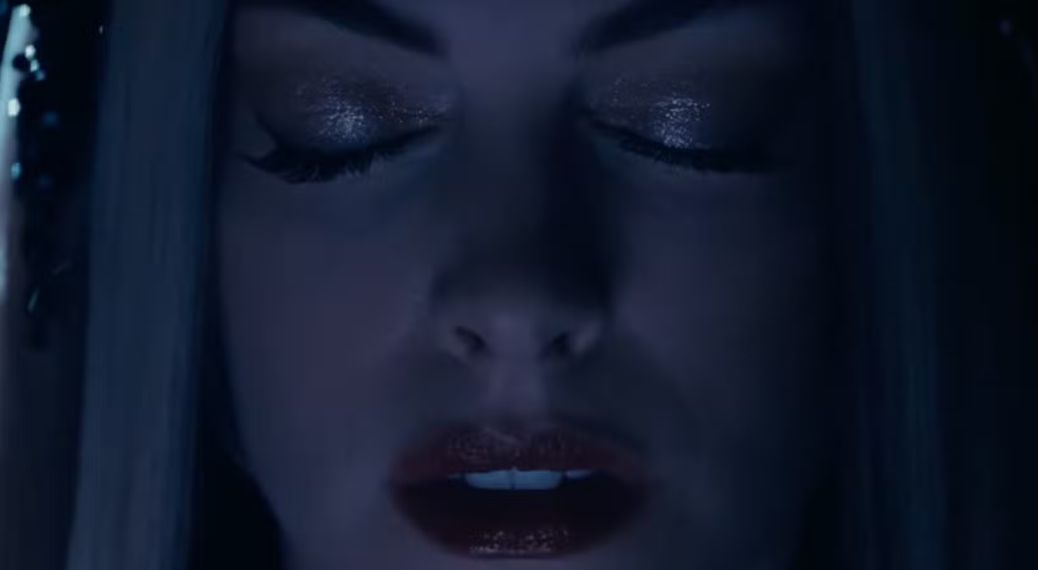
The film’s most unsettling question circles around Mary’s near-death experience, and whether it was truly accidental. The moment is revealed in fragments, each new detail adding another layer of doubt.
During a recent performance, Mary stands elevated above a massive crowd. It is a position of control, of spectacle. Then she sees the red spirit. What follows is disorienting. She steps back, but later admits she cannot fully recall how aware she was of her surroundings. The line between intention and instinct begins to blur.
Her fall is sudden. Brutal. The only thing that saves her is the very costume meant to define her image, catching her by the neck and leaving her suspended mid-air. It is a striking visual, one that captures the precariousness of her state, both physically and emotionally.
The film does not offer a definitive answer. It suggests possibilities instead. One is that the spirit influenced her, pulling her toward the edge in a moment of vulnerability. Another is more grounded and perhaps more troubling. That Mary, worn down by exhaustion and disconnection, may have stepped back without fully caring what would happen next.
Earlier scenes support that reading. Mary is shown drifting through her life, detached from her art and from herself. The pressures of fame, the loss of Sam, and the weight of her own expectations have hollowed something out inside her. In that context, the fall feels less like an isolated incident and more like the culmination of everything she has been carrying.
What Mother Mary ultimately suggests is that the truth may not lie in choosing one explanation over the other. The spirit and Mary’s own emotional state are intertwined. Each feeds into the other. And in that overlap, the film finds its most honest answer.
By the time the story closes, the questions remain. But they feel less urgent. What matters is that Mary and Sam have faced what haunted them. Not perfectly, not completely, but enough to move forward. In a film that resists easy resolution, that quiet shift feels like something close to grace.